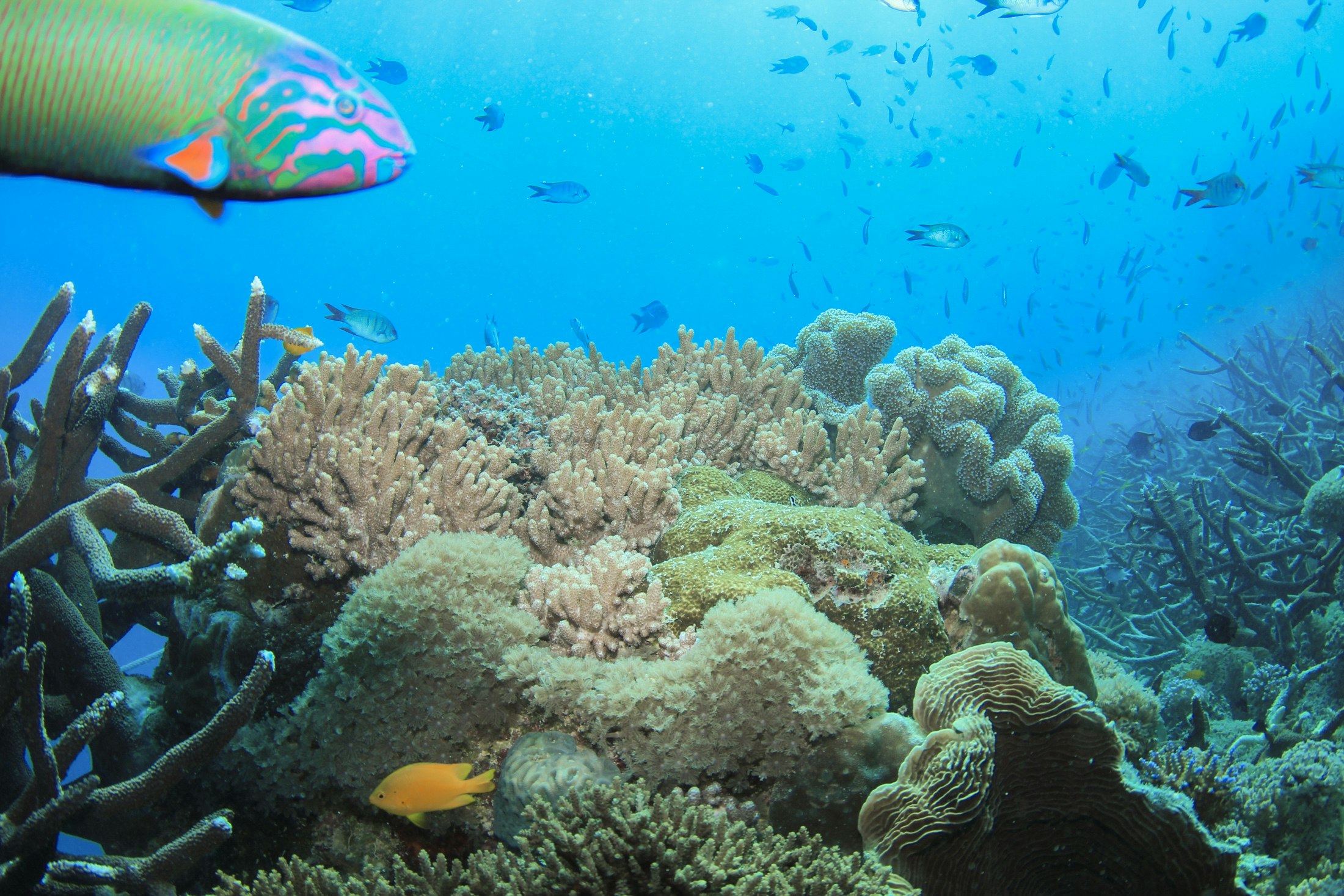
Snorkelling the Great Barrier Reef is one of the top things to do in the Whitsundays, offering travellers a chance to get up close with some of the world’s most iconic marine species.
Snorkelling the Great Barrier Reef is like slipping into a living underwater metropolis, alive with colour and movement. Everywhere you look, something extraordinary is happening. From ancient corals to curious fish, rare sharks, and colourful invertebrates, the reef is bursting with life. Whether you’re visiting for the first time or returning for another adventure, each snorkelling experience reveals something new
Here’s a look at just some of the incredible species you might see when you snorkel on The Great Barrier Reef.
Spotting a green sea turtle gliding past is often a highlight for snorkellers. These gentle reptiles have fascinating life stories—females return to the very beach where they hatched to lay their eggs, and the temperature of the sand determines the sex of the hatchlings. Warmer sand produces mostly females, cooler sand produces mostly males.
Due to rising temperatures, around 99% of turtles born on the Reef today are female, a striking example of how climate change can alter marine populations. Green sea turtles are one of the most commonly encountered species during Great Barrier Reef snorkelling tours, especially around the Whitsundays. We even have a resident turtle on Reefworld named Crush, see if you can spot her when you travel on our Great Barrier Reef Full Day Adventure!

Despite their reputation, blacktip reef sharks are shy, elegant hunters. One of their superpowers lies in the Ampullae of Lorenzini—tiny gel-filled pores on their snout that detect electrical signals in the water. These receptors are so sensitive they can even detect a human heartbeat. Spotting one cruising in the shallows is thrilling, but rest assured—they’re far more interested in fish than in snorkellers. These reef sharks are completely safe to swim with and often glide calmly through shallow coral areas
These charismatic fish live in the protective tentacles of sea anemones and have one of the reef’s most fascinating social systems. All anemonefish are born male. Within each anemone, the largest fish becomes the dominant female. If she dies, the next strongest male transforms into a female—a remarkable example of nature’s flexibility. They’re a favourite among snorkellers and are often spotted in sheltered coral bommies.
These impressive corals grow only about 1cm per year, making them the slowest-growing coral type on the reef. Their strong, dome-like structure allows them to live for thousands of years—some boulder corals are estimated to be up to 5,000 years old. Boulder coral formations are common around Hardy Reef and other Whitsundays snorkelling locations.

One of the most iconic fish on the Great Barrier Reef, the Māori wrasse is known for its intelligence and vivid colouring. Every individual starts life as a female, and around age 15, some transition into males. These males are large, blue, and sport a distinctive hump on their head, while females are smaller and brown or green.

Golden butterflyfish are small, delicate, and often seen flitting between corals. They primarily feed on new coral polyps, so a healthy population of butterflyfish is a good sign that the reef itself is thriving. Seeing multiple pairs of butterflyfish is often an indicator that you’re snorkelling over healthy, regenerating coral landscapes.
Sea stars (or starfish) have remarkable abilities. If an arm is severed, they can regrow it—and in some species, one arm can even grow into an entirely new starfish.
Their feeding method is equally extraordinary: they eject their stomach onto their prey, dissolve it, and slurp it up like soup. Keep an eye out for blue sea stars—one of the most photographed species on the reef.
Bright, patterned, and beautifully bizarre, nudibranchs are shell-less molluscs armed with chemical defenses. Many are poisonous, and their vibrant colours act as a vivid warning to predators. Spotting one is like finding a tiny, living piece of underwater art.

These soft-bodied creatures play a crucial role in keeping the reef healthy. As bioturbators, they ingest sand containing excess nutrients or algae and excrete clean, low-nutrient sand.
Their constant processing helps maintain balance in the ecosystem and they’re an essential part of the reef’s natural filtration system.
Usually seen darting around in large, shimmering schools, yellowtail fusiliers are strikingly colourful during the day. But at night, they change their appearance, blood vessels spread pigment through their tail, turning it red or dark green so they can better blend into the shadows and avoid predators. These fast-moving fish can often be seen when you are snorkelling or from our semi-sub.

These bottom-dwelling sharks blend into the reef with their intricate patterns and shaggy lobes (“tassels”) around their mouths. Their name comes from an Aboriginal word meaning “shaggy beard.” They’re usually found resting on the seafloor, perfectly camouflaged until you spot the outline of their tasselled face. Look carefully around large coral bommies as they’re experts at hiding in plain sight.
Corals get their colour from tiny algae called zooxanthellae, which live inside their tissues. These algae act like solar panels, powering the coral with energy from the sun.
Most healthy corals appear brown, yellow, or green depending on the species of zooxanthellae they host.
Look at the very tips of branching corals, if they’re white or a lighter shade, that’s a sign of new growth! The zooxanthellae simply haven’t moved into the fresh tissue yet—meaning the coral is healthy and expanding.
Every snorkel trip on the Great Barrier Reef is different. One day you may drift beside turtles, the next you might spot a camouflaged wobbegong or a school of fusiliers flashing by.
Whether you’re captivated by microscopic nudibranchs or ancient coral giants, the reef offers endless wonders for those willing to immerse themselves.
Ready to dive in? Plan your Great Barrier Reef Adventure today!
